4:33 pm, Wednesday, 3 December 2025

‘Highly traumatised’ Hong Kong heads into low-key election after deadly tower fire

  • TPW DESK
  • 02:53:05 pm, Wednesday, 3 December 2025
  • 0

Grief and anger in Tai Po housing estate
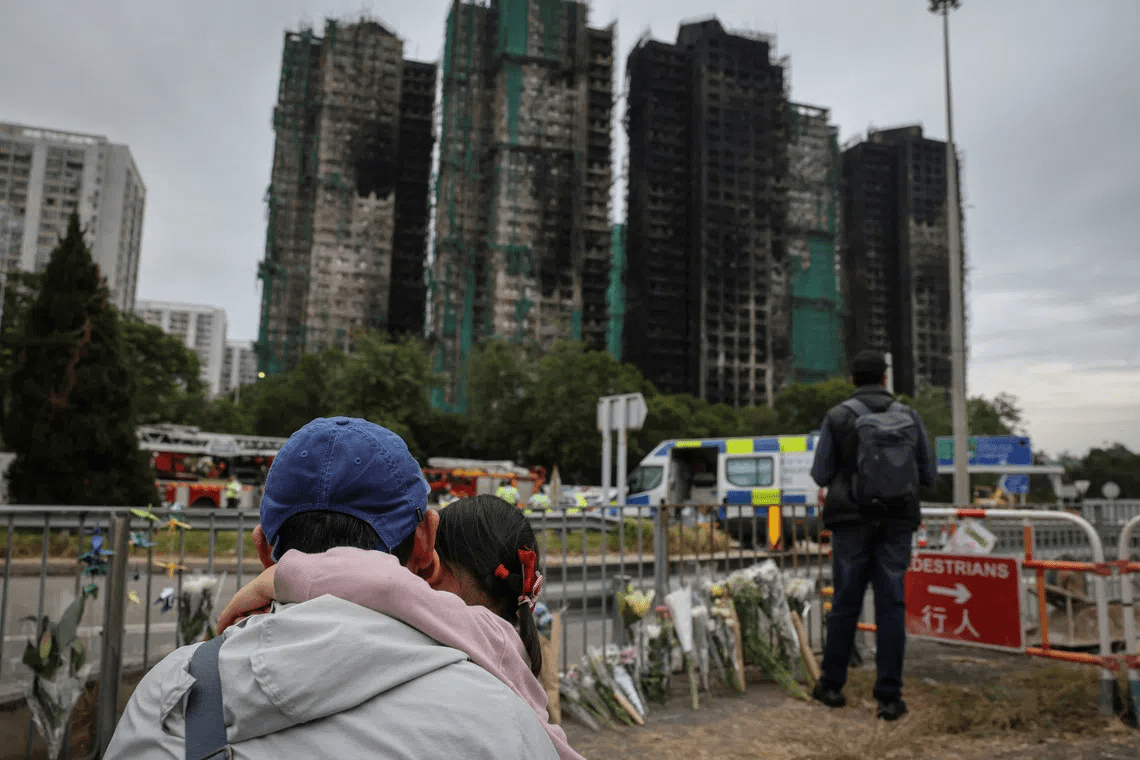
Residents of Hong Kong’s Wang Fuk Court housing complex are slowly returning to retrieve belongings, a week after a fire ripped through the estate and killed more than 150 people. Many are stepping over charred debris and twisted metal to reach their homes, escorted by police and firefighters along darkened corridors that still smell of smoke. Social workers have set up makeshift counselling booths at the edge of the cordoned-off area, as families struggle with shock, survivor’s guilt and the loss of neighbours they had known for decades.

For some, the return is practical rather than emotional. They come with empty suitcases and shopping trolleys to salvage passports, school certificates and family photos before demolition or repairs begin. Volunteers help elderly residents carry heavy bags down stairwells, while community groups deliver hot meals and basic supplies to those now living in temporary shelters. Many evacuees say they are still replaying the night of the fire in their minds, describing frantic escapes down smoke-filled stairwells and a sense that rescue efforts came too late.
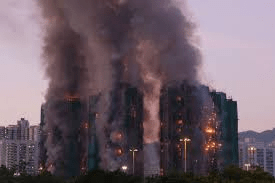
The fire has become Hong Kong’s deadliest blaze in decades, prompting questions over building safety, renovation work and emergency response. Investigators are examining whether unauthorised alterations and cluttered common areas turned the tower into a vertical chimney. Families of the victims have demanded an independent inquiry with public hearings, saying they do not trust internal reviews alone. Local officials have promised a judge-led investigation that will look at building codes, enforcement and how quickly firefighters were able to reach those trapped.

Across the city, the disaster has tapped into deeper anxiety about inequality and housing. Many residents note that older public estates and lower-income blocks have long been vulnerable to fire and other hazards, with narrow corridors, illegal partitions and ageing electrical systems. Charities report a spike in calls from tenants worried about safety in their own buildings, asking how to report hazards without risking conflict with landlords. The blaze has also revived debate over whether the government moves fast enough when red flags are raised by residents’ committees.

Elections go ahead under ‘patriots-only’ rules
Even as mourning rituals continue near the blackened estate, Hong Kong is preparing for a Legislative Council election that will take place under tightened “patriots-only” rules. Authorities insist the vote must proceed on schedule to avoid a gap in the city’s lawmaking body, framing it as a sign of stability after years of political upheaval. Campaigning has, however, shifted to a subdued tone: some candidates have scaled back rallies, removed loudspeakers from vans and focused on door-to-door visits rather than noisy street events.

The new electoral system allows only candidates vetted as loyal to the central government to stand, sharply reducing the scope for opposition voices. Critics argue that this has narrowed the political spectrum and left many voters feeling that the result is preordained, especially in districts still reeling from the fire. Community leaders in Tai Po say turnout there is likely to be low, as residents prioritise funerals, hospital visits and housing issues over politics. Some are calling for a temporary suspension of campaigning activities around the estate out of respect for the dead.
Officials counter that the election itself can be a chance to debate safety, housing and governance, insisting that the new system still offers meaningful choice among candidates. Pro-establishment figures have framed themselves as best placed to secure resources for rebuilding and to push for faster safety upgrades across public estates. They also argue that a calm, tightly managed political environment is necessary for Hong Kong to maintain its role as a financial hub during a period of global uncertainty.

Yet beneath the official messaging, there are signs of public fatigue and quiet frustration. Residents interviewed near the estate speak of feeling “highly traumatised” and disconnected from a political process they see as distant from their daily struggles. Some say they will cast blank ballots or stay home, seeing little link between the ballot box and the accountability they seek over the fire. The coming vote is therefore shaping up as a test not only of the new electoral framework, but of whether Hong Kong’s leaders can rebuild trust while the smell of smoke still lingers in the stairwells.

‘Highly traumatised’ Hong Kong heads into low-key election after deadly tower fire

02:53:05 pm, Wednesday, 3 December 2025

Grief and anger in Tai Po housing estate
Residents of Hong Kong’s Wang Fuk Court housing complex are slowly returning to retrieve belongings, a week after a fire ripped through the estate and killed more than 150 people. Many are stepping over charred debris and twisted metal to reach their homes, escorted by police and firefighters along darkened corridors that still smell of smoke. Social workers have set up makeshift counselling booths at the edge of the cordoned-off area, as families struggle with shock, survivor’s guilt and the loss of neighbours they had known for decades.

For some, the return is practical rather than emotional. They come with empty suitcases and shopping trolleys to salvage passports, school certificates and family photos before demolition or repairs begin. Volunteers help elderly residents carry heavy bags down stairwells, while community groups deliver hot meals and basic supplies to those now living in temporary shelters. Many evacuees say they are still replaying the night of the fire in their minds, describing frantic escapes down smoke-filled stairwells and a sense that rescue efforts came too late.

The fire has become Hong Kong’s deadliest blaze in decades, prompting questions over building safety, renovation work and emergency response. Investigators are examining whether unauthorised alterations and cluttered common areas turned the tower into a vertical chimney. Families of the victims have demanded an independent inquiry with public hearings, saying they do not trust internal reviews alone. Local officials have promised a judge-led investigation that will look at building codes, enforcement and how quickly firefighters were able to reach those trapped.

Across the city, the disaster has tapped into deeper anxiety about inequality and housing. Many residents note that older public estates and lower-income blocks have long been vulnerable to fire and other hazards, with narrow corridors, illegal partitions and ageing electrical systems. Charities report a spike in calls from tenants worried about safety in their own buildings, asking how to report hazards without risking conflict with landlords. The blaze has also revived debate over whether the government moves fast enough when red flags are raised by residents’ committees.

Elections go ahead under ‘patriots-only’ rules
Even as mourning rituals continue near the blackened estate, Hong Kong is preparing for a Legislative Council election that will take place under tightened “patriots-only” rules. Authorities insist the vote must proceed on schedule to avoid a gap in the city’s lawmaking body, framing it as a sign of stability after years of political upheaval. Campaigning has, however, shifted to a subdued tone: some candidates have scaled back rallies, removed loudspeakers from vans and focused on door-to-door visits rather than noisy street events.

The new electoral system allows only candidates vetted as loyal to the central government to stand, sharply reducing the scope for opposition voices. Critics argue that this has narrowed the political spectrum and left many voters feeling that the result is preordained, especially in districts still reeling from the fire. Community leaders in Tai Po say turnout there is likely to be low, as residents prioritise funerals, hospital visits and housing issues over politics. Some are calling for a temporary suspension of campaigning activities around the estate out of respect for the dead.

Officials counter that the election itself can be a chance to debate safety, housing and governance, insisting that the new system still offers meaningful choice among candidates. Pro-establishment figures have framed themselves as best placed to secure resources for rebuilding and to push for faster safety upgrades across public estates. They also argue that a calm, tightly managed political environment is necessary for Hong Kong to maintain its role as a financial hub during a period of global uncertainty.

Yet beneath the official messaging, there are signs of public fatigue and quiet frustration. Residents interviewed near the estate speak of feeling “highly traumatised” and disconnected from a political process they see as distant from their daily struggles. Some say they will cast blank ballots or stay home, seeing little link between the ballot box and the accountability they seek over the fire. The coming vote is therefore shaping up as a test not only of the new electoral framework, but of whether Hong Kong’s leaders can rebuild trust while the smell of smoke still lingers in the stairwells.